November 21, 2008

MJ Ray

Libraries, Cooperatives, OCLC and TTLLP

Thanks to Koha, TTLLP is partly a library services worker cooperative and just now there’s a massive flame-storm about the largest library services consumer cooperative - OCLC, the Online Computer Library Center - because it just updated the terms for sharing its book data collection. OCLC seems to be treating it as a private asset that it can exploit, not the common resource that many librarians thought it was. I’ve been watching this fire with interest - because, at best, I don’t think it’s helping other cooperatives that sell to libraries - and here is my summary.

OCLC and the Great Library Scandal is a good introduction and there’s a summary of the Talis Podcast about OCLC WorldCat Record Use Policy with Karen Clahoun and Roy Tennant which reveals some of the OCLC thinking.

Just like CC and Open Source? Still “No” is a great illustration of how some librarians think OCLC is reaching the wrong conclusion, which then leads to asking Is OCLC truly cooperative? and What would it look like if OCLC was broken up?

A commenter on Tom Watson: Library data asks: “Why would libraries play this game?” Well, the road to hell is paved with good intentions and this road has taken 40 years. First off, OCLC is essentially a good idea - libraries cooperating to act as a counter-weight to the large library service companies.

However, I believe OCLC predates many recent company rule innovations (stronger common asset locks) and data licensing innovations (Share-Alike, Fiduciary Licensing and the general free and open source software movements), so there’s nothing to stop them trying to privatise the assets (library data) that the libraries have given to OCLC and it was only a matter of time before someone tried.

I’m having a similar discussion with another organisation that has been given data by its members under vague terms and is now apparently about to exploit that data for the organisation’s benefit, to the detriment of some members. TTLLP is a member but has not contributed much data because I was suspicious of the lack of terms.

In time, hopefully, asset locks and more awareness of data licensing will eliminate these problems, but there’s going to be a lot more people getting burnt first.

Finally, a quick shout-out to the Open Library Environment as a possible emerging alternative to OCLC for practical services. Raw Thought: Stealing Your Library: The OCLC Powergrab covers some of its motivation (and includes a link to a petition to OCLC, if you want something to sign), but I share Stefano’s (now there’s someone I’d not read in 7 or so years) analysis of some of the challenges:

“any grass-root approach that will get big enough to take on OCLC on the metadata collection and redistribution service that libraries need will have to incorporate under the pressure of its users (if only for legal liability protection) and will have to find an answer to the same set of problems (policy, governance, financial sustainability) that OCLC has.”

07:47am by MJ Ray

National Maintenance Week

National Maintenance Week

This week (21-28 November) is National Maintenance Week. Do a bit of maintenance on your home this week yourself and save a bit of money, as well as improving the appearance of your local community.

National Gutters Day is next Friday (28th). After this summer’s heavy rains led to a curtain of rain falling down, I paid the window cleaners to clear our building’s gutters. Unfortunately, they didn’t clear quite close enough to the end of one gutter and it still overflowed - but I didn’t find this out until the next rainstorm. I’ve bought a long handle and a gutter-cleaning tool for about the price of one gutter-cleaning, so I can deal with it myself in future! How about you?

The gutter-cleaning tool I’d really like are the long tongs, but I found three types in web searches and no-one sells any of them in Europe. Why not?

07:19am by MJ Ray

Clint Adams

We are the owls. We sing falsetto in the night.

I'm not too old to mosh with Dr. Bubbles in front of a Christian rock band. (Obviously this couldn't happen. Why would we be near a Christian rock band?)

Bitch, I am is as constant as the Northern Star. Where dat at?

06:28am

Gunnar Wolf

Remember, remember, the 20th of November...

This might be a good message to write in Spanish... But then again, a long time ago I decided this is an English-posting site. So be it, I'll only have to give more background information.
This day marks the date when, 98 years ago, Francisco I. Madero started the Mexican Revolution - About a decade of unrest, civil war and ideologies. The revolution is what created the violent, uncivil image of the Mexican, which accompanied us for long years in many foreigners' minds. The revolution brought to an end 30 years of a single-man rule, the Porfiriato. But that's only the major symptom - The Revolution had many, many other consequences. About one million (out of a 10 million population) people died. There was a very significative rearrangement of the society, a rearrangement that took about half a century to settle. But I won't write more background - You can always ask the wikipedia about our Revolution.
The reason I am posting this is that, as it usually happens in this time of year, several so-called analysts in the media have started asking, was the Revolution really worth it? Did it change anything at all? Did the Revolution in the end win, or was it defeated from within? Should we still celebrate it?
And there are, yes, reasons to doubt it. Renato Leduc, at the same time a great journalist and a delicious poet, says it as many - while at the same time, as nobody else: Tiempos en que era Dios omnipotente / y el señor Don Porfirio presidente / Tiempos, ¡ay! tan iguales al presente, or ya se están muriendo todos / ¡Jesús qué desilusión...! / se está volviendo gobierno / ¡Ay dios...! La revolución.
Anyway... Our media overlords insist on us forgetting the struggles and the real changes that came from them, on rewriting the history... Probably they will push us later on to have the cristeros as the real fathers of the Nation?
Even if so many bits of reality didn't change after Porfirio Diaz's regime fell in 1910, I find it insulting to think that even 70 years of PRI -with very sharp differences between periods, with huge differences between the PRI-born governments- are comparable to 30 years of a one-man rule; even with brutal repressions such as the dirty war against so many subversive movements in the 50s-80s (as officially There Was No Armed Struggle Anymore, just some pesky communist subversives), it cannot be compared to the Porfirian Peace (ask Cananea and Río Blanco). Today we might have a shameful concentration of money and power in very few hands (including the world's richest man), but it certainly does not reach the point of 1910 where most of the Mexican soil was owned by less than 30 families, with latifundios as big as many states...
Anyway - So far, nothing new - just bits I heard here and there, and my reactions to them. But this morning, around 8:25, I tuned in to Noticias IMER, the news program of one of the few public, non-gubernamental, independent radio stations. An interview was under way, but I could not get the interviewed person's name (I guess, a historian - will write to ask for his data). His comments were very interesting, and very worth echoing. I'll try not to distort him.
The Revolution started off very organized, and with a very simple goal: Get Porfirio Diaz out, and call for real federal elections. Sufragio efectivo, no reelección. Of course, the fight was very short, and Madero became the president, with an overwhelming majority. Of course, also, the reactionary sectors set up a coup and killed Madero. Victoriano Huerta seized the power - and that's where the real revolution really began. Groups all over the country (some of which were at unrest since Madero, as they were not seeing the changes they needed - changes that would bring an end to the huge class differences and disrespect to the native Mexican population) rose in arms, and forced Huerta into exile. Then, they battled each other for many more years. It became known as la bola - When somebody joined the revolutionary forces, people said he went to fight with the crowd. But, inside the crowd, there were very different points of view. No, Carranza, Villa and Zapata (the foremost leaders in the hardest part of the fight) were not power-hungry barbarians - much to the contrary. They had very full, very complex views of the problem and possible solutions. I won't delve much into them, also, as I'm not an expert...
Villa and Zapata had the most compatible approaches, seeking an aggresive land redistribution, a communal property system (closest to most of the indigenous population's roots, what we would now call usos y costumbres). For the government, both favored going towards a Europe-like parliamentary system, where the parliament were the real force, and the president (or prime minister or whatever) would only be the designated person to implement the parliament's decision. Both Villa and Zapata feared the evil stemming from the unlimited power that the Presidential Chair symbolized (Fui soldado de Francisco Villa / de aquel hombre de fama mundial, / que aunque estuvo sentado en la silla / no envidiaba la presidencial). They met at the Aguascalientes convention, and were quite close to each other - but were defeated by the superior Venustiano Carranza (Constitucionalista) army.
Carranza, although vilified for his corruption (nowadays, carrancear is still a synonim for stealing), had an opposite view - also originating from a very deep analysis. Carranza saw that what brought down Madero was, in the end, the lack of power of the President to rule the country without support from the legislative power. So, he pushed a political program making the President the strongest man in Mexico. He and his people wrote and passed the 1917 Constitution, valid today. This constitution goes to great lengths pushing revolutionary ideals - Land and wealth redistribution, universal and free education, keeps a complete separation between state and church, ensures state control over strategic areas... The 1917 constitution is one of our history's greatest achievements.
But, of course, it is not perfect - it paved the way for a hegemonic party controlling the real power behind it all. PRI started as a very heterogeneous mixture of the whole revolutionary family, but slowly became a bureaucratic, stagnated monolith.
And in a somehow ironic twist of destiny, the forces that today push for deepest changes, and precisely in the same direction that Villa and Zapata wished, are... Ejército Zapatista de Liberación Nacional (EZLN) and Frente Popular Francisco Villa (FPFV). EZLN is far more successful and advanced in its social experiment. Again, I won't comment further in what I don't really understand.
As a last point, the commenter I'm quoting (and whose name I must get, to update this post!), said that practically in every country that has transited from any sort of dictatorship towards a more-or-less believable democracy (say, everywhere in South America, or Spain, or Eastern Europe, or...), one of the first steps has been to update or replace the constitution with a new one, preventing the mistakes overlooked by the previous one from being reinstated. In our country, we have long heard about the "Reforma del Estado", a very nice-sounding-term which nobody believes in. After the 2006 electoral mess (no matter who won in the end, everybody will agree it was a mess that should be prevented from happening again, we had high hopes of real changes being introduced. A parliamentary, or at least semi-presidentialist regime was strongly suggested as a way forward. Changing the electoral system towards having second-rounds if needed. _anything!_ But no, we were stuck with... The same as always.
So, did the Revolution win or lose? It is clear to me. It won, and it really shaped -for better- what would happen in the next 100 years. However, in a century, we have been able to twist the law to make it turn against itself. I have to agree with my EZLN-minded friends (I sympathize with EZLN's general goals, but don't think its way forward is the right way to go): Pushing the change from within the government is just wishful thinking, but a strong delusion. However, is there a way to push our country forward without repeating a violent cycle? I really hope so. Our current situation is simply pathetic.
I lack a good closing for this post... So I'll let good old Jefe Pluma Blanca, Renato Leduc, do it for me.
Tiempos de Pancho Villa
y de la guerra de mentadas y tiros en la sierra.
Tiempos de fe
no en Dios sino en la tierra

Por el cerro de la Pila
fueron entrando a Torreón
mi general Pancho Villa
y atrás la revolución...
¡Ay jijos...! ya se nos hizo
cuánto diablo bigotón...

Ya viene Toribio Ortega
subiendo y bajando cerros
y no te enredes ni engañes
que ahí anda Pablito Seáñez
haciendo ladrar los perros.

¡Cuánto usurero barbón...!
¡Ay jijos... cómo les vuela
de la levita el faldón...!
¡Ay jijos... ya se nos hizo:
triunfó la revolución...!

Tenemos camino andado...
No hay que juntarse con rotos
siempre te juegan traición
ya Madero está vengado
ya murió la usurpación.

En su caballo retinto
llegó Emiliano Zapata
bonita su silla charra
y sus botones de plata
pero mucho más bonito
su famoso Plan de Ayala...

Este gallo es de navaja
y no es gallo de espolón
si quieres tierra trabaja
trabaja no seas huevón...

Ya llegó don Venustiano
con sus anteojos oscuros
y Villa y Zapata gritan:
No sé que tengo en los ojos...
porque ya en Pablo González
se vislumbra la traición
¡Ay reata no te revientes
que es el último jalón...!

ya se están muriendo todos
¡Jesús qué desilusión...!
se está volviendo gobierno
¡Ay dios...! La revolución.

03:35am by gwolf (Comments)

November 20, 2008

Matthew Garrett

Separated at birth?

11:39pm (Comments)

Jon Dowland

switch char

Random thought: the forward-slash switch character as used by DOS programs (e.g. chkdisk.exe /f /whatever) is actually a better choice than the dash used by UNIX programs. The forward slash is not a valid character in a DOS filename, so a glob will not expand to include a forward slash, therefore you will never get switches and arguments mixed up.

However, DOS doesn't have a real glob as far as I know (or at least, it's handled by each app itself, rather than the shell).

11:36pm

nautilus sums

I've got a ISO image that I wish to burn to DVD. I've got a copy burned already which has the same MD5 sum as the ISO file. I've just attempted to burn it another two times, both using nautilus cd burner (well, right click and 'burn image'). In both cases, the sum ended up being different, but strangely, the sum was the same for both of these subsequent burns.

Has anyone else experienced problems getting 1:1 burns with nautilus cd burner?

11:36pm

x40 suspend

Do you own a thinkpad X40, or a similar device - specifically one which needed the S3 hacks to get the backlight back on after resume? If you aren't sure, lshal | grep quirk should tell you (if you have hal). You're looking for something like power_management.quirk.s3_bios = true (and s3_mode).

Kernel 2.6.26 added a lot of quirk handling into the drivers, meaning an end to user-space hacks. pm-suspend, from the pm-utils package, assumes that all of these quirks have been resolved, but it seems that the S3 ones for my hardware have not. This means broken suspend/resume out-of-the-box. This is fixed in a version of pm-utils to be released in a week or thereabouts, after the freeze begins.

The X40 at one point seemed to be the Debian hacker's laptop of choice. I bought mine after glowing recommendations from Steve McIntyre, Stephen Gran, Mark Hymers, Amaya Rodrigo, Daniel Stone, Matthew Garrett, Rob McQueen and several others. It's one of the best pieces of hardware I've ever had the pleasure of using, and I'm concerned that we might even be going backwards in terms of supporting this device from release-to-release.

If you do have such a device, can you please try the following:

  • install the 2.6.26 kernel
  • boot into single user mode
  • modprobe i915
  • echo mem > /sys/power/state
  • resume your laptop

Please try this and report to me whether the backlight came back on - either in the discussion page for this post, or via email (jon.backlight@alcopop.org). The kernel bug to try and get this fixed is http://bugzilla.kernel.org/show_bug.cgi?id=10985, but it might not be possible to backport a fix for this to the Lenny kernel. The bug against pm-utils regarding assuming 2.6.26 is quirk-free is https://bugs.freedesktop.org/show_bug.cgi?id=16453 (Debian bug http://bugs.debian.org/488144).

11:36pm

Gintautas Miliauskas

Book meme

I am a bit of a bookworm, so I could not resist this meme:

  • Grab the nearest book.
  • Open it to page 56.
  • Find the fifth sentence.
  • Post the text of the sentence in your journal along with these instructions.
  • Don't dig for your favorite book, the cool book, or the intellectual one: pick the CLOSEST.

The book is actually a Lithuanian translation, but I'll translate the sentence into English for you:

After entering the palace, he seduced the king's wife, killed the king with her help and seized his throne.

Can you guess which book the sentence is from?

10:41pm by Gintautas Miliauskas (noreply@blogger.com)

Martin Michlmayr

Case stories of good and bad community interaction

It is often argued that companies have to work with the FOSS community and there are good reasons for doing so. I've tried to collect a number of case stories of good and bad community interaction that may help as a starting point for further exploration of this topic:

  • NVidia is probably the best example of a company that is not interested in providing open source drivers for their graphics chips. There are lots of folks who won't buy hardware with NVidia chips for this reason. Intel is the number 1 choice at the moment because they work closely with the community. Related to this, the Linux Foundation and kernel community released a statement regarding open drivers.
  • When Sun finally made Java available as open source, they argued that it would help inclusion and distribution of Java (e.g. inclusion into Debian). Sun also felt that the GPL provides the strongest protection "against misbehaviour by monopolists in the Java platform".
  • The Novell/Microsoft deal was not perceived well by the community, which led to web sites like http://boycottnovell.com
  • Nokia recently had an insightful blog posting about the problems when nobody knows about the open source contributions you make: for example, you cannot influence decisions in a project as easily.
  • Sun is often criticized for dominating all open source projects they run. They can be used as a good example that you have to give up some control in order to get outside participation.
  • The fact that Xen is not in the mainline kernel is a key reason why a number of companies (e.g. IBM, Red Hat) are looking at KVM (which is in the mainline kernel and actively developed in the community). In fact, "looking" is probably not the best word. IBM is actively working on KVM to make it a viable solution and Red Hat recently acquired Qumranet, the company behind KVM.
  • Oracle got fairly bad press for copying the Red Hat distribution and changing Red Hat to Oracle, without engaging in the Red Hat community.
  • There's a paper that looks at "empirical evidence on the incentives of firms that engage in OS activities." They look at 146 Italian companies supplying open source solutions, but unfortunately the study doesn't include any major company.

Can you think of other examples?

(Originally published on FOSSBazaar where comments are possible)

07:27pm

Alastair McKinstry

One of Those Codes

--3177-- VALGRIND INTERNAL ERROR: Valgrind received a signal 11 (SIGSEGV) - exiting
--3177-- si_code=80;  Faulting address: 0x0;  sp: 0x402A9FD40

valgrind: the 'impossible' happened:
   Killed by fatal signal
   ==3177==    at 0x3801FDEA: unlinkBlock (m_mallocfree.c:190)
   ==3177==    by 0x38020CAE: vgPlain_arena_malloc (m_mallocfree.c:1055)
   ==3177==    by 0x38035516: vgPlain_cli_malloc (replacemalloc_core.c:101)
   ==3177==    by 0x380022F5: vgMemCheck_malloc (mc_malloc_wrappers.c:182)
   ==3177==    by 0x38035BA7: do_client_request (scheduler.c:1158)
   ==3177==    by 0x380372B1: vgPlain_scheduler (scheduler.c:869)
   ==3177==    by 0x38051B59: run_a_thread_NORETURN (syswrap-linux.c:87)

This code has already killed one debugger (Intel DB) and sent strace into an infinite loop of segfaults. <Sigh />.

Tags , ,

05:10pm by Alastair McKinstry (Comments)

John Goerzen

The Demise of PC Magazine

I just read the news that PC Magazine is being canceled. It’s not exactly a shock, given the state of technical magazines right now. I haven’t read one of those in years, since they turned to be more of a consumer than a technical publication.

But I hope I am not the only one out there that remembers PC Magazine from the mid to late 1980s. I had two favorite parts in each issue: the programming example, and the “Abort, Retry, Fail” page at the back of the magazine.

The programming example was usually some sort of DOS (or, on occasion, OS/2) utility. It was usually written in assembly, and would be accompanied by a BASIC program you could type in to get the resulting binary, as assemblers weren’t readily available. The BASIC program was line after line of decimal numbers that would decode them and write out the resulting binary — sort of a primitive uuencode for paper. Trying to type those in gave me some serious eyestrain on more than one occasion. By now, I forget what most of those utilities did, but I remember one: BatchMan. It was a collection of tools for use in DOS batch files, and could do things like display output in color or even — yes — play monophonic music. It came with an example that displayed some lyrics about batch programming on-screen, set to what I later realized was the Batman theme. Geek nirvana, right?

But Batchman was too big to publish the source code, or the BASIC decoder, in print. It might have been one of those things that eventually led me to a CompuServe account. PC Magazine had some deal with CompuServe that you could get their utilities for free, or reduced cost — I forget. CompuServe was probably where I sent my first email, from my account which was 71510,1421 — comma and all. In later years, you could pay a small fee to send email to the Internet, and I had the amazingly attractive email address of 71510.1421@cis.compuserve.com. Take that, gmail.

PC Magazine eventually stopped running utilities that taught people about assembly or batch programming and shifted more to the genre of Windows screensavers. They stopped their articles about how hard disks work and what SCSI is all about, and instead have cover stories like “Vista made easy!” I am, sadly, not making this up. Gone are the days of investigating alternative operating systems like OS/2.

It appears that “Abort, Retry, Fail” is gone, too. It was a one-page thing at the back of each magazine that featured braindead error messages and funny stories about people that did things like FAX an image of a floppy disk to a remote office — before such stories were cliche. Sort of like DailyWTF these days. The sad truth is that the people that would FAX an image of a floppy are probably the ones that are reading PC Magazine today.

I still have a bunch of PC Magazine issues — the good ones — in my parents’ basement. I also still have my floppies with the utilities on them somewhere. One day, when I get some time — I’m estimating this will be about when Jacob goes to college — I’ll go back and take another look at them.

12:11pm by John Goerzen (Comments)

MJ Ray

Social Enterprise Day: Online Discussion

I’m sceptical about Global Enterpreneurship Week after last year’s problems, but today is Social Enterprise Day, so I’ve tried to get involved with the WalesCoop Ethical Entrepreneurs Online Discussion from 1-2pm and 7-8pm today. Come join us!

07:09am by MJ Ray

Runa Sandvik

The IT Crowd season three

Yep, they are back. Starting tomorrow on Channel 4. Don’t miss it.

06:50am by runa

November 19, 2008

David Watson

Happy Birthday ORG!

The Open Rights Group is 3, and now has reached over 1000 fivers a month. To celebrate ORG have issued each of the first 1000 members with web badges, I have added my ORG badges into the sidebar.

If you care about any of these:

* Automatic Vehicle Tracking
* Copyright
* Creative Commons
* Data Protection
* DRM
* e-Voting
* Freedom of Information
* Identity
* Intellectual Property
* Net Neutrality
* Open Geodata
* Open Source
* Police Records
* Privacy
* Public Domain
* Regulation of Investigatory Powers Act
* Release The Music
* RFID

visit the site and sign up to help reach them target of 1500 fivers a month by December.

10:29pm by dwatson (Comments)

Christoph Haas

screenshots.debian.net gets slashdotted

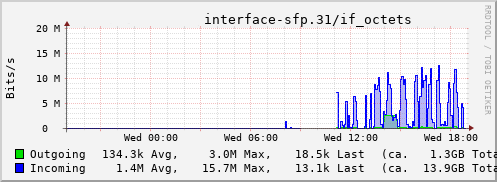
Bear with me that I keep you posted with boring news of screenshots.debian.net. But after further optimisation (caching the start page, serving screenshots directly from nginx instead of via Pylons) we decided that it’s time to get us on Slashdot. Thanks a lot to zepolen for teaching me about memcached and threading! The slashdot people have approved my announcement and we are already getting hammered by people following the link to screenshots.debian.net. Currently the server load is still near 100%, we have 10 Mbps network traffic and 60 request/second. Watching the web server logs is currently pretty cool. :)

21:08:30 up 455 days, 15:08, 2 users, load average: 1.27, 0.94, 0.69

Network traffic when slashdotting began

Yes, I\'m on slashdot! :)

Honestly I hardly ever read Slashdot. But apparently many others do. And if you are especially bored you can read the comments on the posting there. So much childishness. “You should have made it a distribution-independent site.” “How should I make a screenshot of libfoo-bar?” Why can’t people just be happy with what they get for free and make proper suggestions? Well, go create something yourself. Expecting something perfect from the start is pretty naive. But not unexpected. :)

08:25pm by Christoph Haas (Comments)

Steinar H. Gunderson

Cisco declares IPv6 feature parity

This is a big deal for anyone interested in IPv6: Cisco is declaring IOS feature parity for IPv4 and IPv6. That is, if a given router/switch with a given IOS image can do something on v4, it can from now on do the same thing on v6 with no extra cost. (That is, given that Cisco supports it in any image, obviously.) They're starting to roll it out on the 6500 series of layer 3 switches, and the rest is supposedly following gradually over the coming calendar year.

In particular, this means that companies do not need to pay extra to upgrade their core network to being IPv6 capable -- it's a base feature you get as part of the package. (I won't say “for free”, because equipment in this class is ridiculously expensive.) Neither will they need to shell out $XX,XXX just to experiment with IPv6 in the lab. It's removing a very important roadblock in getting IPv6 more widely deployed.

Now we need Juniper to follow suit. My guess is they're following this very closely.

08:21pm

Jose Luis Rivas Contreras

new libtorrent and rtorrent (beta, again!)

I think Jari reads my blog haha. There are shiny new packages for libtorrent and rtorrent. The same place as ever:

My debian-playground: http://debian.rivco.info/

My private repo:
deb{,-src} http://reprepro.deb.rivco.info/ experimental main

And of course, git (checkout master-experimental and upstream-experimental):
http://git.debian.org/?p=collab-maint/libtorrent.git
http://git.debian.org/?p=collab-maint/rtorrent.git

07:11pm by ghostbar (Comments)

Kartik Mistry

KDE India l10n Poster


* Keeping tradition of cool posters, KDE India team has come with set of awesome posters again. Pradeepto announced here and here and I loved this for obvious reason!


04:42pm by Kartik (કાર્તિક) Mistry (મિસ્ત્રી) (Comments)

Jose Luis Rivas Contreras

libtorrent 0.12.3 and rtorrent 0.8.3 released! (beta)

So between yesterday and today I packaged the new upstream version of libtorrent/rtorrent 0.12.3 and 0.8.3 as beta. I still need to do some testing on the packages and maybe change libtorrent from OpenSSL to TLS.

Anyway, in the meantime you can grab the binaries (only 386) and sources from my debian-playground:

http://debian.rivco.info/libtorrent/0.12.3-1~b2.exp/
http://debian.rivco.info/rtorrent/0.8.3-1~b1.exp/

(there may be new beta versions at the time you read this so please check as well the parent directory)

Or my repo:

deb http://reprepro.deb.rivco.info/ experimental main

Hopefully they'll be available soon from the Debian Archive, just need to check some stuff before that. Anyway, they're fully working right now.

04:02pm by ghostbar (Comments)

Junichi Uekawa

Macbook dmesg.

Macbook dmesg. I've got a new macbook (MacBook 4,1). dmesg is noisy, something is wrong. It's telling me it's having something wrong with /dev/hda several times a second.

01:22pm by Junichi Uekawa

Michal Čihař

Gammu test version 1.21.92

Good news everyone, new Gammu testing version is out. This time biggest fix is Bluetooth support for Mac OS X, accompanied with fixed locking on some architectures and improved debug configuration, to allow proper integration with python-gammu.

Full list of changes:

  • Reimplement locking and add tests for it.
  • GSM_SetDebugFileDescriptor now accepts flag whether file descriptor can be closed (bug #749).
  • Soname change due to API breakage (see above).
  • Fixed compilation on Mac OS X, thanks to Juan A. Bertolin for testing.

You can download from usual place: http://cihar.com/gammu/,

Debian users will find packages in experimental soon.

12:24pm by Michal Čihař

MJ Ray

SPI Nov 2008 Meeting

The next Software in the Public Interest board meeting will take at 2000 UTC (noon PST / 15:00 EST / 20:00 GMT / 21:00 CET) on Wednesday 19 November 2008 on irc.oftc.net #spi. The agenda is online, but I’ve not seen an announcement yet.

I’m surprised there’s not much on the agenda. Missing topics include supporting FACIL. What else do you think SPI should be doing?

11:19am by MJ Ray

John Goerzen

Jacob Update

Let’s start with a photo:

img_5563r.jpg

That’s Jacob over at the pumpkin patch near us. He found something to inspect, and spent awhile doing it. As he does.

He’s taken a liking to our cat, Nash. Jacob calls him “cat Nash”. Never just “Nash”. When we get home from somewhere, if the cat is around, Jacob will say, “Hi cat Nash! Hi cat Nash!” Then he’ll bend over, touch his head to Nash’s back, and try to give him a hug. Nash, surprisingly, doesn’t mind this.

Jacob enjoys being a part of — well, everything. He will repeat back new words and phrases, trying to learn how to say them, even if he doesn’t understand what they mean yet. His favorite recent outdoor discovery is that grain silos are all over the place. He’ll point them out excitedly as we drive down the road. I had never noticed just how many there are.

One day, he pointed at a water tower and said “SILO!” I understood why he said that, but I told him it was a water tower. He remembered that, and learned to tell them apart in a day or two. Then one morning he surprised me with, “Water tower. Water inside.” How he figured that out, I don’t know.

img_5446r.jpg

There’s another photo of him at the pumpkin patch.

The other day, I accidentally triggered our smoke alarms while checking one for a battery. After that, Jacob loved to say “BEEP! BEEP!” Sometimes followed by “Smoke larm. Hurt ears.” We learned how to say BEEP BEEP loud and also quiet.

He’s certainly a lot of fun at this age.

11:11am by John Goerzen (Comments)

Y Giridhar Appaji Nag

The Complete Bootleg Woodstock 69 - ID3 (ID3v2) tags

A few weeks ago, I was searching for ID3 (ID3v2) tags for The Complete Bootleg Woodstock 69 collection for a friend of mine. I was able to find them at FreeDB but:
  • The Artist information was not always correct.
  • All the music was marked as being of genre Rock.
So armed with Wikipedia's help, we created better tags on our own. In case you are interested, the tags are available for download here.

Each directory has a tags.txt file (which has also been split into individual TrackXX.tags files for all the tracks). The files are 'scripting' friendly.

PS: It seems the collection converted to mp3 (at a constant 128kbps bit rate) comes to 618MB. Very nice if you want to burn it to a single CD.

10:40am

Joey Hess

a year of haskell (not really)

Guess it's really been longer than a year that haskell has been on my mind, though not much lately. Things are aligning again. I'll shortly be visiting the Bay Area again -- last time I piled up haskell documentation for the plane trip. This time I'm looking forward to the Real World Haskell book waiting in the mailbox when I get back.

I read and commented on the first several draft chapters, hoping my ignorance would be useful, and I know one of the authors (though if I'm not mistaken I've never met him). So I'm looking forward to reading it, but also feeling guilty that I haven't managed to do anything serious with haskell yet. No new project that I dared, or had the patience, to attempt in it. But that's what the book's supposed to solve. Getting over the gap from a basic understanding to being able to add the language as another tool in the kit.

And hey, it's better than seriously learning javascript would be, right?


Right now I can't think about haskell without thinking about Buddhism. I won't bore you with why they're connected in my head.

06:19am

Kees Cook

md5 lookups for 4 chars and common words

Here’s a fun link. This site appears to have seeded their md5 hash list with all lower case character strings of 4 characters or fewer and many english words (probably from some large dictionaries), and they seem to be adding more as they go. This makes me want to put up an interface to the 7 character alpha-numeric-plus-many-special-chars rainbow table I’ve got. But searching the 500G table for a single hash takes… a while. I’d need to batch it up. Go-go-gadget web 2.0!

04:19am by kees (Comments)

November 18, 2008

John Goerzen

Real World Haskell Update

Times are exciting. Our book, Real World Haskell, is now available in a number of venues. But before I get to that, I’ve got to talk about what a thrill this project has been.

I created our internal Darcs repository in May, 2007. Since then, the three of us has made 1324 commits — and that doesn’t count work done by copyeditors and others at O’Reilly.

We made available early drafts of the book online for commenting, which served as our tech review process. By the time we finished writing the book, about 800 people had submitted over 7,500 comments. I’ve never seen anything like it, and really appreciate all those that commented about it.

As for availability, RWH is available:

  • For immediate purchase with electronic delivery, from O’Reilly’s page
  • For immediate viewing on Safari Books Online, at its book page
  • Paper editing timing is still tentative, but we’re estimating arrival in bookstores the week of December 8.

People are talking about it on blogs, twitter, etc. We’re excited!

11:53pm by John Goerzen (Comments)

Uwe Hermann

Migrating bdb svn repositories from one version to another and to fsfs

Today I had to work with a really old svn repository again, which was still in the old bdb format (not in the newer and recommended fsfs one). This caused quite some problems, like, um... you cannot checkout, update, or commit anything.

$ svn co file:///path/to/myrepo
svn: Unable to open an ra_local session to URL
svn: Unable to open repository 'file:///path/to/myrepo'
svn: Berkeley DB error for filesystem '/path/to/myrepo/db' while opening environment:
svn: DB_VERSION_MISMATCH: Database environment version mismatch
svn: bdb: Program version 4.6 doesn't match environment version 4.4

A quick search revealed that this is bug #342508, a solution is/was supposedly mentioned in /usr/share/doc/subversion/README.db4.3 (which does no longer exist in the Debian unstable package). Luckily this blogpost has some details.

So, the short HOWTO for upgrading an svn repository of one Berkeley DB version to another one is:

$ cd /path/to/myrepo/db
$ db4.4_checkpoint -1
$ db4.4_recover
$ db4.4_archive
$ svnlook youngest ..
$ db4.6_archive -d

In this case I upgraded from 4.4 to 4.6 (do "apt-get install db4.4-util db4.6-util" if necessary).

While I was at it, I also switched the repository to the fsfs format then:

$ svnadmin dump /path/to/myrepo > myrepo.dump
$ mv /path/to/myrepo /path/to/myrepo.bak
$ svnadmin create --fs-type fsfs /path/to/myrepo
$ svnadmin load /path/to/myrepo < myrepo.dump

Maybe this is helpful for some other people out there.

10:07pm by Uwe Hermann (Comments)

Adrian von Bidder

SyncML (new toy)

Q: is a mobile phone (nice hardware, shitty firmware, btw) waterproof? A: I now got this new toy (Sony Ericsson S500i) as aresult. And because I don't really like losing contacts again (I never managed to connect to the old phone from Linux and was too lazy to use the Windows software), I have now fired up kitchensync with the OBEX SyncML client from the OpenSync project. And was very surprised that after only very little fiddling with the configuration I could indeed copy the contacts from the phone to KDE's addressbook.

There seems to be a — not so usual anymore in this decade — utf8 problem somewhere (it looks as if the encoding from the phone is converted to utf8 twice, or it is latin1 to utf8 encoded but was already utf8 on the phone), and synchronisation is only one way so far (from the phone to KDE-PIM), with changes on the KDE side being overwritten. No idea which component those bugs are in, and documentation I've found is not very verbose. So, to start with:

I've gotten this nice dump with hcidump. Now, how do I extract the actual data streams from that dump? I know I have to use wbxml2xml on the data, but first I need to unwrap the network data, and I haven't found that (probably read past it in the manpage of hcidump because I'm a bit tired.) Of course, if anybody out there has solved my issues I'd be just as happy with information on how that was done instead. In the mean time, I at least have reasonable back up of my phone's contact database again.

09:32pm by nospam@example.com (Adrian von Bidder) (Comments)

Ingo Juergensmann

PPPoE, OpenVPN, DD-WRT and kernel 2.6.27.6

I'm somewhat known for triggering bugs nobody else hits. This was appreciated by several developers in good old days when I still used my Amiga as main machine (that's a decade ago in the meanwhile) where I was a betatester for some applications. But it seems I still got the talent to trigger strange bugs.

Today: Upgrading from kernel 2.6.26.2 to 2.6.27.6 breaks your OpenVPN tunnel for your DD-Wrt routers PPPoE session.

Yes, it's true. When using 2.6.27.6, DD-Wrt can't connect to the pppoe-server on my dedicated server anymore, instead it brings this kind of errors:


Jan 1 00:07:54 vpn daemon.err pppd[513]: Invalid PPPoE tag length (12117)
Jan 1 00:07:54 vpn daemon.err pppd[495]: Invalid PPPoE tag length (12117)
Jan 1 00:07:54 vpn daemon.err pppd[486]: Invalid PPPoE tag length (12117)
Jan 1 00:07:54 vpn daemon.err pppd[369]: Invalid PPPoE tag length (12117)
Jan 1 00:07:54 vpn daemon.err pppd[1176]: Invalid PPPoE tag length (12117)
Jan 1 00:07:54 vpn daemon.err pppd[1399]: Invalid PPPoE tag length (12117)
Jan 1 00:07:59 vpn daemon.err pppd[1384]: Invalid PPPoE tag length (12117)


The OpenVPN tunnel itself does work. I can see pppoe packets on both ends of the tunnel, alas the PPPoE session can't be started. When I reboot 2.6.26.2 again, everything works again.
Note: I booted into 2.6.27.6 because I wanted to try out if gphoto2 works better with a newer kernel because of maybe-fixed bugs in the USB stack.

Whee! Just another problem to deal with in the next days... ;-)

09:05pm by nospam@example.com (Ingo Jürgensmann) (Comments)

Nikon D90 and Linux - a quick update

As I have reported lately I obtained a Nikon D90 DSLR some weeks ago. Gphoto2 (and other application depending on its functionality like digikam) didn't recognized the D90 in PTP mode and the camera can't be configured yet to offer the SD card as a mass storage device.

In the meantime I found out that the D90 does work with gphoto2 in generic PTP mode - at least this is with Ubuntu Intrepid on my x86 laptop while Debian Sid on my G4 PowerPC fails to detect the D90. It detects the camera, the pictures, loads some 1 or 2 thumbs and hangs.
So, I don't know whether there are some differences between Intrepid and Sid (gphoto2 is the same version as reported by dpkg - with the exception of the "ubuntu" version string in Intrepid) or a PPC vs x86 issue - or maybe a kernel issue as this is different between those two machines as well.

This is just a quick note, mostly for myself. I'll try to get more details within the next days and file a bugreport. But if you, dear lazyweb, have some additional pointers for me, I'd appreciate those! :-)

08:45pm by nospam@example.com (Ingo Jürgensmann) (Comments)

Matthew Garrett

Aggressive graphics power management

My current desktop PC has an RS790-based Radeon on-board graphics controller. It also has a Radeon X1900 plugged in. Playing with my Watts Up, I found that the system was (at idle!) drawing around 35W more power with the X1900 than with the on-board graphics.

This is clearly less than ideal.

Recent Radeons all support dynamic clock gating, a technology where the clocks to various bits of the chip are turned off when not in use. Unfortunately it seems that this is generally already enabled by the BIOS on most hardware, so playing with that didn't give me any power savings. Next I looked at Powerplay, the AMD technology for reducing clocks and voltages. It turns out that my desktop hardware doesn't provide any Powerplay tables, so no joy there either. What next?

Radeons all carry a ROM containing a bunch of tables and scripts written in a straightforward bytecode language called Atom. The idea is that OS-specific drivers can call the Atom tables to perform tasks that are hardware dependent, even without knowledge of the specific low-level nature of the hardware they're driving. You can use Atom to do several things, from card initialisation through mode setting to (crucially) setting the clock frequencies. Jerome Glisse wrote a small utility called Atomtools that lets you execute Atom scripts and set the core and RAM frequencies. Playing with this showed that it was possible to save the best part of 5W by underclocking the graphics core, and about the same again by reducing the memory clock. A total saving of 9-10W was pretty significant.

The main problem with reducing the memory clock was that doing it while the screen is being scanned out results in memory corruption, showing up as big ugly graphical artifacts on the screen. I'm a fan of doing power management as aggressively as possible, which means reclocking the memory whenever the system is idle. Turning the screen off to reclock the memory would avoid the graphical corruption but introduce irritating flicker, so that wasn't really an option. The next plan was to synchronise the memory reclocking to the vertical refresh interval, the period of time between the bottom of a frame and the top of the next frame being drawn. Unfortunately setting the memory frequency took somewhere between 2 and 20 milliseconds, far too long to finish inside that time period.

So. Just using Atom was clearly not going to be possible. The next step was to try writing the registers directly. Looking at the R500 register documentation showed that the MPLL_FUNC_CNTL register contained the PLL dividers for the memory clock. Simply smacking a new value in here would allow changing the frequency of the memory clock with a single register write. It even worked. Almost. I could change the frequency within small ranges, but going any further resulted in increasingly severe graphical corruption. Unlike the sort I got with the Atom approach to changing the frequency, this corruption manifested itself as a range of effects from shimmering on the screen down to blocks of image gradually disappearing in an impressively trippy (though somewhat disturbing) way.

Next step was to perform a register dump before and after changing the frequencies via Atom, and compare them to the registers I was programming. MC_ARB_RATIO_CLK_SEQ was consistently different, which is where things got interesting. The AMD docs helpfully describe this register as "Magic field, please use the excel programming guide. Sets the hclk/sclk ratio in the arbiter", about as helpful as being told that the register contents are defined by careful examination of a series of butterflies kept somewhere in Taiwan. Now what?

Back to Atomtools. Enabling debugging let me watch a dump of the Atom script as it ran. The relevant part of the dump is here. The most significant point was:
MOVE_REG @ 0xBC09
src: ID[0x0000+B39E].[31:0] -> 0xFF7FFF7F
dst: REG[0xFE16].[31:0] <- 0xFF7FFF7F
, showing that the value in question was being read out of a table in the video BIOS (ID[0x0000+B39E] indicating the base of the ROM plus 0xB39E). Looking further back showed that WS[0x40] contained a number that was used as an index into the table. Grepping the header files gave 0x40 as ATOM_WS_QUOTIENT, containing the quotient of a division operation immediately beforehand. Working back from there showed that the value was derived from a formula involving the divider frequencies of the memory PLL and the source PLL. Reimplementing that was trivial, and now I could program the same register values. Hurrah!

It didn't work, of course. These things never do. It looked like modifying this value didn't actually do anything unless the memory controller was reinitialised. Looking through the Atom dump showed that this was achieved by calling the MemoryDeviceInit script. Reimplementing this from scratch was one option, but it had a bunch of branches and frankly I'm lazy and that's why I work on this Linux stuff rather than getting a proper job. This particular script was fast, so there was no real reason to do it by hand instead of just using the interpreter. Timing showed that doing so could easily be done within the vblank interval. This time, it even worked.

I've done a proof of concept that involved wedging this into the Radeon DRM code with extreme prejudice, but it needs some rework. However, it demonstrates that it's possible to downclock the memory whenever the screen is idle without there being any observable screen flicker. Combine that with GPU downclocking and we can save about 10W without any noticable degradation in performance or output. Victory!

I gave the code to someone with an X1300 and it promptly corrupted their screen and locked their machine up. Oh well. Turns out that they have a different memory controller or some such madness.

So, obviously, there's more work to be done on this. I've put some test code here. It's a small program that should be run as root. It should reprogram an Atom-based discrete graphics card[1] to half its memory clock. Running it again will halve it again. I don't recommend doing that. You'll need to reboot to get the full clock back. This isn't vblank synced, so it may introduce some graphical corruption. If the corruption is static (ie, isn't moving or flickering) then that's fine. If it's moving then I (and/or the docs) suck and there's still work to be done. If your machine hangs then I'm interested in knowing what hardware you have and may have some further debugging code to be run. Unless you have an X1300, in which case it's known to break and what were you thinking running this code you crazy mad fool.

Once this is stable it shouldn't take long to integrate it into the DRM and X layers. I'm also trying to get hold of some mobile AMD hardware to test what impact we can have on laptops.

[1] Shockingly enough, it's somewhat harder to underclock graphics memory on a shared memory system

08:20pm (Comments)

MJ Ray

How to Check Web Shops for Basic Security

I just had a very nice chat on the phone with a man whose first attempt at online shopping seemed to have resulted in a fraudster using his card to buy mobile phone top-ups. I don’t understand why he called us (it wasn’t one of my web shops), but I hope I did the right thing by directing him back to his credit card company’s fraud department.

While I was talking to him, I was checking the shop he had problems with. I wouldn’t have bought from it. Here’s how I checked it:-

1. Check the Page

Open the front page of the site in one browser window and then use another window to get to a page that ought to be secure (the payment/checkout page is my usual one). Look at them both. Do either of them show any logos from well-known payment (Barclays, RBS, Protx, …) or security-checking services (thawte - who else?)? That’s not entirely reliable, but it’s usually a good sign because those companies attack people using their marks without permission.

Look at the payment/checkout page - does the address in the address bar start “https”? If so, is the padlock in the browser status bar (usually bottom right) closed? That usually means it’s encrypted with a Secure Sockets Layer (SSL) certificate.

2. Check the Certificate

Open the certificate details. In Firefox-based browsers, double-click the padlock, then click the “View Certificate” button. Then pick “Subject” in the second list box. Usually, it looks like this:-

screenshot

Basic Certificate Screenshot


in that case, as long as the “CN” (common name) is the webserver you thought you were using and the “O” (organisation) and country code (C) make sense, then there’s nothing wrong.

Some shops now use Extended Validation certificates and give a bit more information. Here’s one from a train company:-

screenshot

Extended Validation Screenshot


In addition to the CN and O, it shows Organisational Unit (OU), Location (L), State (ST) and also other address parts and company number that Firefox doesn’t display neatly. This is a bit more reassuring, but also a lot more expensive for the shop owner (around 20 times more, last I checked), so I don’t blame shops for not using them.

3. Check the Registrations

By this point, the payment processing and actual transaction are looking pretty good. Finally, I check the recipient. Find the business details on the web shop. Does it include a geographic address? If it contains a company registration number, look it up on the Companies House website.

Then I find the business details on the domain names - you can use CoolWhois to look up domain names. If any of the addresses or numbers don’t match (Website, SSL Certificate, Whois), then I call them to ask why their website says they’re based in Bristol but their domain name is registered to Bolton. If they don’t answer messages, or - worse - the domain name says “Non-trading Individual” and the address has been omitted from the public listing, I give up on them and look for another shop. There’s no point securely paying someone that you can never reach if there’s a problem.

4. Buy Stuff and Check the Statements

All being well, I then buy stuff and check my credit card statement each month before I pay it. I think any web shop owner (or webmaster - I help some people with this sort of thing) should be taking care of the basics above. Do your shops measure up?

Despite the above checks, I can only remember not buying something online once in the last year. A couple of times, I’ve worked through the above steps and it’s changed which shop I bought from - and I’m pretty sure it saved me from losing £400 on one purchase.

06:44pm by MJ Ray

John Goerzen

Frozen Bicycling

Some of you might recall that I’ve been bicycling to work, about 10 miles each way.

Over the last two weeks, I haven’t been able to ride much because it’s been too muddy. Today I rode to work.

It was about 25F-30F out there, so this was my first below-freezing bicycle ride. It went OK, though I was somewhat on the cool side — I’ll add more layers next time.

Today, I wore wool socks, bicycling shorts, tights over that, my short sleeve shirt, a long-sleeve shirt over it, full gloves, and a balaclava. I should have worn probably one more layer everywhere, but I survived and I’m not frozen.

You may now commence speculation about whether or not I am crazy.

06:09pm by John Goerzen (Comments)

Web Design Companies That Understand Technology

There are a lot of companies out there that do web design work that looks fabulous.

Unfortunately, a lot of these sites look fabulous only when viewed in IE6 build xxxx, with a 75dpi monitor, fonts set to the expected size, running on Windows XP SP2, with JavaScript enabled. Try looking at the site through Safari, Firefox, with larger-than-expected fonts, and things break down: text boxes overlap each other, buttons that should work don’t, and it becomes a mess.

So, if your employer wanted a web design company that has a good grasp of Web standards and the appropriate use of them, where would you look? A company that can write good HTML, CSS, and JavaScript, and still make the site look appealing? A company that has heard of Apache and gets the appropriate nausea when someone mentions ColdFusion or Frontpage?

So far, I’ve seen these places mentioned by others:

WebDevStudios.com
Happy Cog
Crowd Favorite

04:52pm by John Goerzen (Comments)

Kartik Mistry

Kartik Mistry


* So, WordPress.com feed weirdness has come again…


12:10pm by Kartik (કાર્તિક) Mistry (મિસ્ત્રી) (Comments)

Alastair McKinstry

Hubble open for Business

Just as life was getting frantically busy, and as catdynamics predicted, Hubble is back open for business with a Supplemental Call for Observing Proposals.

So an idea I bounced off my supervisor has rebounded with a deadline attached. Fun predicted.

Tags , ,

11:30am by Alastair McKinstry (Comments)

Russell Coker

Keating College

Some time ago I spoke to Craig Keating about his plans for a new secondary school in the center of Melbourne. His plan was to focus on the core academic areas and cater to academically gifted students. He had some interesting ideas for his business, one of which was to pay teachers rates that are typical for private schools (higher rates than government schools) but not have any sport programs in the evenings or weekends (private schools typically require teachers to work every Saturday and one evening every week in coaching a sport). This would therefore give an hourly pay rate that was significantly higher than most private schools offered and would thus allow recruiting some of the most skilled teachers.

One of his ideas was to intentionally keep the school small so that every teacher could know every student. One of the problems with most schools is that they take no feedback from the students. It seems that this serious deficiency would be largely addressed if the teachers knew the students and talked to them.

He pointed out that in the history of our school system (which largely derived from the UK system) the private schools had a lot of sporting activities as a way of filling time for boarding students, given that few schools accept boarders (and those that do have only a small portion of the students boarding) the sports are just a distraction from study. This is not to say that sports are inherently bad or should be avoided. He encouraged parents to take their children to sporting activities that suit the interests of the child and the beliefs of the parents instead of having the child be drafted into a school sport and the parents being forced to take an unwilling child to sporting activities that they detest (which I believe is a common school experience).

My own observation of school sport is that it is the epicentre of school bullying. There is an inherent risk of getting hurt when engaging in a sport. Some children get hurt every lesson, an intelligent person who ran a school with an intensive sports program might statistically analyse the injuries incurred and look for patterns. Children who are not good at sport are targeted for attack, for example when I was in year 7 (the first year of high school) one of my friends was assigned to the “cork bobbing” team in the swimming contest - this involved a contest to collect corks floating in the toddler pool for the students who were really bad at swimming. At that moment I knew that my friend would leave the school as the teachers had set him up for more intensive bullying than he could handle. Yet somehow the government still seems to believe that school sports are good!

This is not to say that physical activity is bad, the PE 4 Life program [1] (which is given a positive review in the movie Supersize Me [2]) seems useful. It has a focus on fitness for everyone rather than pointless competition for the most skilled.

I have just seen a sad announcement on the Keating College web site [3] that they will not be opening next year (and probably not opening at all). The Victorian Registration and Qualifications Authority (VCRA) announced in November that the application to be registered as a school (which was submitted in March) was rejected.

The first reason for the rejection was the lack of facilities for teaching woodwork and metalwork. As the VCRA apparently has no problems registering girls’ schools that don’t teach hard maths (a teacher at one such school told me that not enough girls wanted to study maths) it seems unreasonable to deny registration to a school that doesn’t teach some crafts subjects and caters to students who aren’t interested in those areas.

The second reason was the lack of facilities for sport and PE. Given the number of gyms in the city area it seems most likely that if specific objections were provided eight months earlier then something could have been easily arranged to cover the health and fitness issues. When I spoke to Craig he had specific plans for using the city baths, gyms, and parks for sporting activities, I expect that most parents who aren’t sports fanatics would find that his plans for PE were quite acceptable.

The third reason is the claim that 600 square meters of office space is only enough to teach one class of 24 students. That would mean that 25 square meters is needed for each student! I wonder if students are expected to bring their own binoculars to see the teacher or whether the school is expected to provide them. :-#

The government has a list of schools that work with the Australian Institute of Sport [4]. These schools provide additional flexibility in studies for athletes and probably some other benefits that aren’t mentioned in the brief web page. I don’t object to such special facilities being made available for the small number of students who might end up representing Australia in the Olympics at some future time. But I think that a greater benefit could be provided to a greater number of students if there were a number of schools opened to focus on the needs of students who are academically gifted. This doesn’t require that the government spend any money (they spend hundreds of millions of dollars on the AIS), merely that they not oppose schools that want to focus on teaching.

Currently the government is trying to force Internet censorship upon us with the claim that it will “protect children” [5]. It seems obvious to me that encouraging the establishment of schools such as Keating College will protect children from bullying (which is a very real threat and is the direct cause of some suicides). While so far no-one has shown any evidence that censoring the net will protect any child.

11:24am by etbe (Comments)

Matthew Palmer

Dependency Resolution Failure

So, the yum package manager (and, I assume, RPM underlying that) has a fairly neat (to my naive eyes, anyway) implementation of multiarch support -- on an amd64 system you can install i386 packages, and they go into a separate lib tree, and there's no conflicts or unhappiness. It even installs both the i386 and x86_64 versions of libraries automatically when you ask for them, which is a nice touch.

However, the dependency resolver doesn't quite seem to have gotten the hang of some of the corner cases. For instance, if you want to install a noarch package that depends on an architecture-specific package, but for some reason only the i386 version is available (say, your local package repo hasn't quite built the x86_64 version yet) then yum will happily install the i386 version and say "OK, dependency resolved". Nice try, but no cigar. What makes it a bit more irritating is that once you work this out and the x86_64 package is available, you need to remove the i386 version of the package by hand in order for it to pick up the x86_64 package and install it. Just asking yum "hey, can you install this package" results in "nope, it's already installed, go away".

08:58am

Andrew Pollock

[opinion] Watch this space

Those infamous Somali pirates have hijacked an oil supertanker

A Saudi oil supertanker at that. Carrying $100 million worth of oil, which I believe was headed for the US.

They've also got the Ukrainian ship full of tanks and what-not, which apparently pissed off the Russians.

I predict that real soon there's going to be serious